


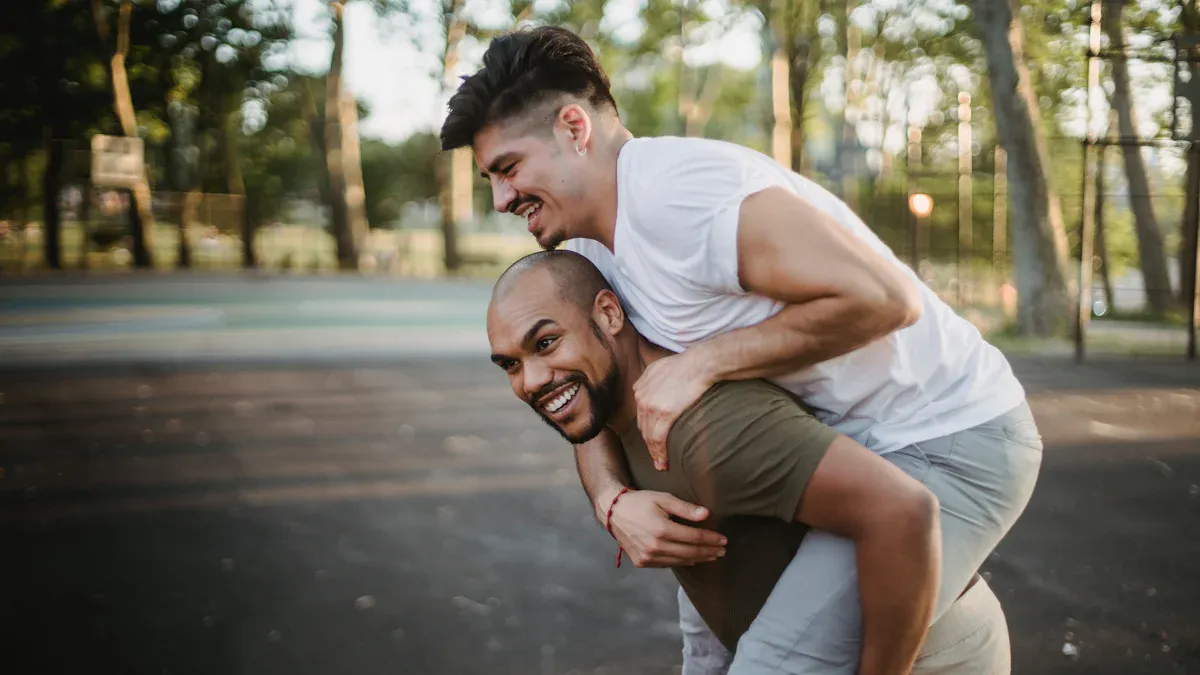
To try the carried sex position, stand face-to-face with your partner. Wrap their legs around your waist and support their weight by holding under their thighs. This position, also called Stand & Carry or Ekiben, creates close body contact and strong eye connection. You must use clear communication and check comfort levels often. Choose a safe space with solid footing. Adjust your grip and stance for balance and safety. You can adapt the position for different body types and strength levels.
Key Takeaways
- Communicate openly with your partner about comfort and boundaries before trying the carried sex position.
- Choose a safe, stable space with a non-slip surface to prevent accidents during the position.
- Use your legs to lift and support your partner’s weight, keeping their body close to yours for better balance.
- Maintain eye contact throughout the experience to enhance intimacy and emotional connection.
- Warm up with stretches and exercises to prepare your muscles and reduce the risk of strain.
- Adapt the position to suit your body types, using props like walls or chairs for extra support.
- Start slow and check in with each other regularly to ensure comfort and enjoyment.
- Explore variations of the carried position to keep your intimate experiences fresh and exciting.
Carried Sex Position Basics
What Is the Carried Sex Position
The carried sex position involves one partner lifting and holding the other while engaging in intercourse. You stand face-to-face, and your partner wraps their legs around your waist. You support their weight by holding under their thighs or hips. This position is also known as Stand & Carry or, in some cultures, Ekiben. Each term describes the same core idea: one partner carries the other, creating a unique blend of physical closeness and movement.
Stand & Carry and Ekiben Explained
Stand & Carry refers to the classic version where you remain upright and support your partner’s weight. Ekiben, a term popularized in Japanese culture, highlights the same position but often emphasizes spontaneity and adventure. Both versions require you to focus on safety and communication. You must ensure stable balance and a non-slippery floor. If you feel any sudden strain in your back or core, stop immediately. Always keep your partner’s weight close to your torso and, when possible, use a wall for extra support. These steps help prevent injury and make the experience more enjoyable.
Tip: Lift with your legs, not your back, to reduce the risk of strain.
| Variation Name | Description | Key Focus |
|---|---|---|
| Stand & Carry | Upright, partner supported by arms/legs | Balance, strength |
| Ekiben | Spontaneous, often against a wall | Adventure, safety |
Why Try This Position
The carried sex position offers more than just novelty. You experience intense intimacy because your bodies stay close, and you maintain eye contact throughout. This position allows you to connect both physically and emotionally. Trying new positions like this can reveal new aspects of your personality, such as assertiveness or playfulness. You may find that adapting to your partner’s comfort level deepens your trust and communication.
Intimacy and Adventure
You gain several relationship benefits by exploring the carried sex position:
- You enhance intimacy by sharing a physically demanding and emotionally connecting experience.
- You discover new ways to express dominance, support, or vulnerability.
- You adapt together, ensuring both partners feel safe and comfortable.
Sexual health experts note that exploring new positions can increase pleasure and satisfaction. For example, the carried sex position can heighten arousal through deep eye contact and full-body contact. If you want to learn more about the psychological benefits of sexual exploration, you can find resources from Planned Parenthood or The Kinsey Institute.
Note: Always communicate openly with your partner before trying new positions. Consent and comfort are essential for a positive experience.
How to Do the Carried Sex Position
Preparation Steps
Communication and Consent
Before you attempt the carried sex position, you must prioritize open communication. Discuss your comfort levels, boundaries, and any physical limitations with your partner. Clear consent ensures both of you feel safe and respected. You should check in with each other throughout the experience. If either of you feels discomfort or uncertainty, pause and adjust as needed.
Tip: Use a safe word or signal to communicate quickly if you need to stop or change something.
Choosing a Safe Space
Select a location with a stable, non-slippery floor. Avoid areas with rugs, loose objects, or wet surfaces. Good lighting helps you see your footing and maintain balance. You may want to position yourselves near a sturdy wall or piece of furniture for extra support. Make sure you have enough space to move freely without bumping into obstacles.
Safety Reminder: Remove any items that could cause tripping or slipping before you begin.
Recommended Warm-Up Exercises and Stretches:
- Core strengthening exercises improve your body control and protect your spine.
- Hip mobility stretches increase flexibility, making it easier to achieve and maintain the position.
- Pelvic floor relaxation techniques help reduce tension and enhance comfort.
Taking a few minutes to warm up can reduce the risk of muscle strain or injury.
Getting into Position
Leg and Arm Placement
- Stand face-to-face with your partner. Make sure both of you feel steady and relaxed.
- The partner being lifted should wrap their legs around your waist. They can cross their ankles behind your back for added security.
- Place your hands under your partner’s thighs or around their hips. Keep your arms close to your body to maximize strength and control.
- Maintain a straight back and bend your knees slightly. This stance helps you lift safely and maintain balance.
Pro Tip: Engage your core muscles and lift with your legs, not your back, to prevent injury.
Entry and Movement
- Communicate with your partner before lifting. Count down together or use a signal to coordinate.
- Lift your partner smoothly, keeping their weight close to your torso. Avoid jerky or sudden movements.
- Once lifted, adjust your grip and stance as needed. If you feel unstable, use a wall for support.
- Begin with gentle, slow movements. Gradually increase intensity only if both partners feel comfortable and balanced.
- Maintain eye contact and check in with your partner regularly. Watch for signs of discomfort or fatigue.
Common Mistakes and How to Avoid Them:
- Failing to control the angle can lead to discomfort or even injury. Always keep the alignment natural for both partners.
- Using force or moving too quickly increases the risk of accidents. Start slow and build up gradually.
- Ignoring body language can cause missed signals about pain or discomfort. Stay attentive and responsive.
- Skipping the warm-up makes muscles more prone to strain. Always stretch before attempting the carried sex position.
| Step | What to Do | Why It Matters |
|---|---|---|
| Communicate | Discuss comfort and boundaries | Ensures safety and consent |
| Prepare the Space | Clear area, check floor, use wall if needed | Prevents slips and falls |
| Warm Up | Stretch core, hips, pelvic floor | Reduces injury risk |
| Enter Position | Lift with legs, keep partner close | Maintains control and balance |
| Move Slowly | Start gentle, adjust as needed | Avoids strain and injury |
Ending Safely
To exit the carried sex position, slow down your movements and communicate your intention to stop. Lower your partner gently by bending your knees and keeping your back straight. Make sure your partner releases their grip on your waist before their feet touch the ground. Check in with each other to ensure neither of you feels pain or discomfort.
Note: Never rush the dismount. Controlled movements protect both partners from accidental falls or muscle strain.
By following these steps, you can enjoy the carried sex position with greater confidence and safety. Remember, strength, balance, and ongoing communication are essential for a positive experience.
Carried Sex Position Safety Tips

Staying safe during the carried sex position requires careful planning and awareness. You can reduce risks by understanding how to support your partner’s weight, using your environment wisely, and knowing when to avoid this position.
Preventing Injury
Supporting Weight
Supporting your partner’s weight is the foundation of safety in this position. You need to use your strongest muscles and maintain good posture. Always keep your partner’s weight close to your torso. This helps you stay balanced and reduces strain on your back and arms.
- Use your legs to lift and lower your partner, not your back.
- Communicate with your partner before and during the lift.
- Consider using supportive products designed for intimacy. These tools, made from firm foam, help lift your partner’s hips and maintain comfort. They hold their shape under pressure, unlike regular pillows.
- Take breaks if you feel muscle fatigue or discomfort.
Tip: If you or your partner feel unstable, pause and adjust your grip or stance before continuing.
Using Walls or Furniture
Walls and sturdy furniture can provide extra support and stability. You can lean your partner against a wall to share their weight and reduce the physical demand on your body. This method also helps prevent slips and falls, especially on smooth or wet surfaces.
- Choose a wall or furniture that does not move or tip easily.
- Avoid using chairs or tables that might slide.
- Make sure the floor is dry and free of obstacles.
Common Injuries to Watch For:
- Muscle strains from lifting or holding awkward positions
- Slips and falls, especially in bathrooms or on hard floors
- Bruises or minor cuts from bumping into furniture
Case Example: A couple tried the carried sex position in a tiled bathroom. The floor became slippery, causing a fall and a minor injury. They learned to always check the surface and use a wall for support.
| Injury Prevention Tip | Why It Matters |
|---|---|
| Use strong leg muscles | Reduces risk of back injury |
| Communicate throughout | Prevents sudden movements or drops |
| Lean on a wall for support | Adds stability and balance |
| Clear the area of obstacles | Lowers chance of tripping or falling |
For more information on sexual safety, you can visit resources like the American Sexual Health Association or Planned Parenthood.
When to Avoid This Position
You should avoid the carried sex position if you or your partner have any injuries, chronic pain, or limited mobility. This position also poses higher risks in environments with slippery floors, such as bathrooms or kitchens. If you feel tired, dizzy, or unable to maintain balance, choose a safer alternative.
- Do not attempt this position if you have back, knee, or shoulder problems.
- Avoid if either partner feels anxious or uncomfortable about being lifted.
- Skip this position in cramped or cluttered spaces.
Note: Medical professionals report that muscular injuries and falls are common in positions that require significant physical effort or take place in risky environments. Always prioritize safety and comfort over novelty.
By following these safety tips, you can enjoy the carried sex position while minimizing the risk of injury.
Making the Carried Sex Position Easier
Strength and Endurance Tips
Building strength and endurance can make the carried sex position more enjoyable and sustainable. You do not need to be a professional athlete, but targeted exercises will help you support your partner’s weight and maintain balance. Focus on movements that strengthen your core, legs, and upper body.
- Couch hip thrusts target your glutes and lower back, giving you the power to thrust and stabilize.
- Sliding plank pikes engage your core and shoulders, improving your ability to hold positions.
- Push-ups build upper body strength, which is essential for supporting your partner.
- Hollow body exercises strengthen your deep abdominal muscles, providing stability and endurance.
You can also boost your stamina with endurance activities. Try these options to improve your performance:
- Push-ups enhance upper body flexibility and strength.
- Kegels tone your pelvic floor muscles, leading to better control and endurance.
- Interval training increases your cardiovascular stamina, helping you last longer.
- Stationary lunges build leg strength and improve blood flow to the pelvic region.
- Yoga increases your overall stamina and energy, making it easier to maintain challenging positions.
Tip: Start with a few repetitions of each exercise and gradually increase as you get stronger. Consistency matters more than intensity.
Using Props and Support
Props and support can transform your experience with the carried sex position. You can use sturdy furniture, such as a solid chair or a firm bed edge, to help distribute weight and reduce strain. A wall offers excellent support, especially if you feel unsteady or want to try variations like the wall-assisted carry.
| Prop/Support | How It Helps | Practical Example |
|---|---|---|
| Wall | Adds stability and balance | Lean your partner against it |
| Firm chair/bed | Reduces weight-bearing for lifter | Sit and let partner straddle you |
| Foam wedge/pillow | Elevates hips, eases entry and movement | Place under partner’s hips |
Note: Always check that any furniture or props you use are stable and can support your combined weight.
You can find more tips on using props for intimacy on reputable sexual health platforms like Planned Parenthood or educational fitness sites.
Adapting for Body Types
Every couple brings unique body types and proportions to the bedroom. You can adapt the carried sex position to suit your needs and maximize comfort.
- If you and your partner have a significant height difference, try the sideways 69 variation. Both of you lie on your sides, facing opposite directions, which helps align your bodies.
- The taller partner can curve into a C-shape to reduce strain and improve access.
- For couples with weight differences, place the heavier partner on the bottom in the standard position. This prevents excessive weight-bearing and makes the experience safer.
- The sideways option also helps distribute pressure evenly, reducing discomfort for both partners.
| Adaptation Scenario | Recommended Technique | Benefit |
|---|---|---|
| Height difference | Sideways 69, C-shape curve | Better alignment, less strain |
| Weight difference | Heavier partner on bottom | Safer, less weight to support |
| Both partners similar size | Standard or wall-assisted carry | Balanced, easy to maintain |
Callout: Communication remains key. Discuss comfort and preferences before trying new adaptations.
You can explore more adaptation ideas and sexual health advice from organizations like the Kinsey Institute or the American Sexual Health Association.
Overcoming Common Challenges
Fatigue and Muscle Strain
You may notice your muscles tire quickly during the carried sex position. This position demands strength and endurance, especially from your legs, arms, and core. Many couples experience muscle fatigue or cramps, which can interrupt intimacy. You can manage these challenges with several practical strategies:
- Warm up and stretch before you begin. Gentle movements prepare your muscles and reduce the risk of strain.
- Stay hydrated. Drink water before and after activity to prevent cramps.
- Maintain a regular fitness routine. Stronger muscles support your partner’s weight more easily.
- Communicate with your partner. Adjust your position if you feel discomfort.
- Use cushions or pillows for support. These props help distribute weight and relieve pressure on your legs.
- Take breaks. Short rests allow your muscles to recover and keep the experience enjoyable.
- Practice relaxation techniques. Deep breathing or mindfulness can reduce tension and increase comfort.
- Consider using a water-based lubricant. This reduces friction and helps prevent soreness.
- Address any underlying health issues with a healthcare provider.
Tip: If you feel a muscle cramp, pause and gently stretch the affected area. Do not push through pain.
Many couples share their experiences on online forums, noting that regular stretching and open communication make a significant difference. Experts also recommend listening to your body and stopping if you feel pain.
Height and Weight Differences
Height and weight differences can create unique challenges in the carried sex position. You might find it difficult to align your bodies or maintain balance. Couples often report that a significant height gap makes entry awkward, while weight differences can strain the lifter’s muscles.
You can overcome these obstacles with creative adaptations:
- Use a wall for support. Leaning your partner against a sturdy surface helps with alignment and reduces the load on your arms.
- Try sitting on a firm chair or bed edge. This variation allows you to enjoy the intimacy of the position without full weight-bearing.
- Adjust your grip and stance. A wider base with your feet improves stability.
- Communicate openly about comfort and limits. Make adjustments as needed.
Scenario: One partner stood on a low step to match their partner’s height, making entry smoother and more comfortable.
You can find more tips and shared experiences in sexual health communities, where couples discuss what works best for different body types.
Balance Issues
Maintaining balance is essential for safety and enjoyment. Many couples struggle with stability, especially on slippery or uneven surfaces. Loss of balance can lead to falls or minor injuries.
You can improve balance with these steps:
- Choose a location with a stable, non-slip floor.
- Keep your partner’s weight close to your torso.
- Use a wall or sturdy furniture for extra support.
- Move slowly and avoid sudden shifts in position.
- Wear shoes with good grip if needed.
Note: If you feel unsteady, stop and reposition before continuing.
The following table summarizes common challenges and practical solutions:
| Challenge | Solution |
|---|---|
| Muscle fatigue/cramps | Warm up, hydrate, take breaks, use support |
| Height/weight mismatch | Use props, adjust stance, communicate |
| Balance issues | Stable surface, wall support, slow movements |
You can learn from others by reading expert advice and community discussions. Many couples find that patience and practice lead to greater confidence and enjoyment in the carried sex position.
Fun Variations of the Carried Sex Position
Exploring variations of the carried sex position can add excitement and adaptability to your intimate experiences. You can tailor each variation to your comfort, strength, and environment. Here are three popular options you can try.
Wall-Assisted Carry
You can use a wall to support your partner’s back during the carried position. This method reduces the physical demand on your arms and legs. You stand facing your partner, and they wrap their legs around your waist. You press their back against a sturdy wall for extra stability.
Tip: Choose a wall with no sharp edges or hanging objects. Safety comes first.
This variation works well if you want to focus on eye contact and hands-free intimacy. You can use your hands for caressing or supporting your partner’s thighs. Many couples prefer this option for longer sessions because it minimizes fatigue.
Lap Carry
The lap carry offers a seated alternative. You sit on a firm chair or the edge of a bed. Your partner straddles your lap, facing you, and wraps their legs around your waist. This position allows you to maintain close contact without lifting your partner’s full weight.
- You can use your hands to guide movement or provide extra support.
- Your partner can control the rhythm and depth of penetration.
- This variation suits couples with different body types or strength levels.
Note: Always check that the chair or surface is stable before starting.
The lap carry encourages relaxation and extended intimacy. You can maintain eye contact and communicate easily throughout.
Creative Adaptations
You can experiment with creative adaptations to suit your needs. Some couples use props like sturdy foam wedges or yoga blocks to elevate the hips. Others try standing on steps or platforms to adjust for height differences. You can also combine elements from different variations for a personalized experience.
- Try a sideways carry for a unique angle.
- Use a low step to help with entry if you have a height gap.
- Explore community forums for new ideas and tips from other couples.
Explore More: Visit online communities like r/sex on Reddit or educational platforms for user-shared experiences and creative suggestions.
| Variation | Physical Demand | Support Needed | Best For |
|---|---|---|---|
| Wall-Assisted Carry | Moderate | Wall | Stability, longer play |
| Lap Carry | Low | Chair/Bed | Comfort, easy access |
| Creative Adaptation | Varies | Props/Steps | Customization, novelty |
You can try these variations to keep your intimate life fresh and adaptable. Each option offers unique benefits and can help you discover what works best for you and your partner. 👫
Enhancing Pleasure and Connection
Eye Contact and Intimacy
You can deepen your connection during the carried sex position by maintaining steady eye contact. This simple act transforms physical closeness into emotional intimacy. Relationship experts highlight several benefits:
- Eye contact fosters a deeper emotional connection and vulnerability between partners.
- You witness each other’s pleasure, which enhances intimacy.
- Sustained eye contact plays a significant role in human sexual arousal and intimacy.
- Face-to-face positions allow you to observe your partner’s expressions, nurturing understanding.
- You can gauge each other’s reactions, leading to a more intense emotional connection.
Try focusing on your partner’s eyes as you move together. Notice their facial expressions and respond with gentle touches or reassuring words. This practice helps you stay present and engaged, making the experience more meaningful for both of you.
Tip: If you feel nervous about eye contact, start with brief glances and gradually increase the duration as you become more comfortable.
Adding Foreplay
Foreplay can elevate your experience in the carried sex position. You set the mood and build anticipation before lifting your partner. Begin with gentle kisses, caresses, or whispered words. Explore each other’s bodies while standing close. You can use your hands to stimulate sensitive areas, such as the neck, back, or inner thighs.
Consider these steps for effective foreplay:
- Stand face-to-face and embrace your partner.
- Exchange slow, deep kisses to build excitement.
- Use your hands to explore and tease, focusing on areas that elicit strong responses.
- Whisper affirmations or desires to create a sense of trust and anticipation.
Foreplay not only increases arousal but also helps both partners relax. You prepare your bodies and minds for the physical demands of the carried position.
Rhythm and Depth
Establishing a comfortable rhythm and depth is essential for pleasure and safety. Start with slow, controlled movements. You can synchronize your breathing and motion to maintain balance. Adjust the pace based on your partner’s feedback.
| Technique | How to Apply | Benefit |
|---|---|---|
| Slow thrusts | Move gently and steadily | Enhances control and comfort |
| Deep eye contact | Maintain gaze during movement | Increases intimacy |
| Pausing | Stop briefly to check in or adjust | Prevents fatigue and strain |
You can experiment with different angles or speeds to discover what feels best. Communicate openly about comfort and pleasure. Small adjustments in rhythm or depth can make a significant difference in satisfaction.
Note: Always listen to your partner’s cues. If either of you feels discomfort, pause and make necessary changes.
By focusing on eye contact, engaging in foreplay, and mastering rhythm and depth, you create a more pleasurable and connected experience in the carried sex position. These techniques help you build trust, enhance intimacy, and enjoy each moment together.
You can master the carried sex position by following key steps: communicate openly, prepare your space, and prioritize safety. Relationship counselors recommend that you:
- Discuss desires and boundaries before trying new positions.
- Focus on building intimacy and emotional connection.
- Stay open to exploring different variations.
With practice and adaptation, most couples can enjoy this position. Embrace new experiences together and strengthen your bond through shared exploration. 🚀
FAQ
How can you make the carried sex position more comfortable?
You can use a sturdy wall or chair for extra support. Place a cushion under your partner’s hips to reduce pressure. Adjust your grip and stance until both of you feel stable and relaxed.
What if you or your partner lack upper body strength?
Try the lap carry or wall-assisted variation. These options reduce the need for lifting. Focus on building strength with simple exercises like squats and push-ups over time.
Is the carried sex position safe for everyone?
No, this position may not suit people with back, knee, or shoulder issues. Always check with a healthcare provider if you have concerns about physical limitations or past injuries.
How do you avoid losing balance during the position?
Choose a non-slip surface and keep your partner’s weight close to your body. Move slowly and communicate often. Use a wall or sturdy furniture for extra stability if needed.
Can you try the carried sex position if you have a height difference?
Yes, you can. Use a step or platform to help align your bodies. The partner being lifted can adjust their leg position for better comfort and access.
What should you do if you feel muscle fatigue?
Pause and rest immediately. Stretch your muscles and drink water. Resume only when you feel ready. Using props or switching to a seated variation can help reduce strain.
How do you talk to your partner about trying this position?
Start with an open conversation about your interests and boundaries. Use positive language and ask for their thoughts. Agree on a safe word or signal before you begin.
